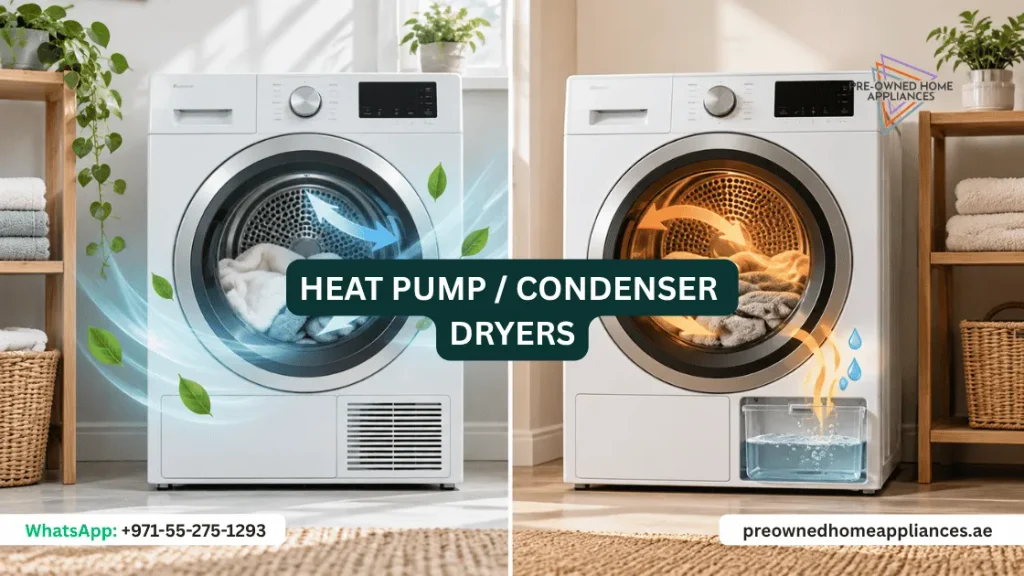
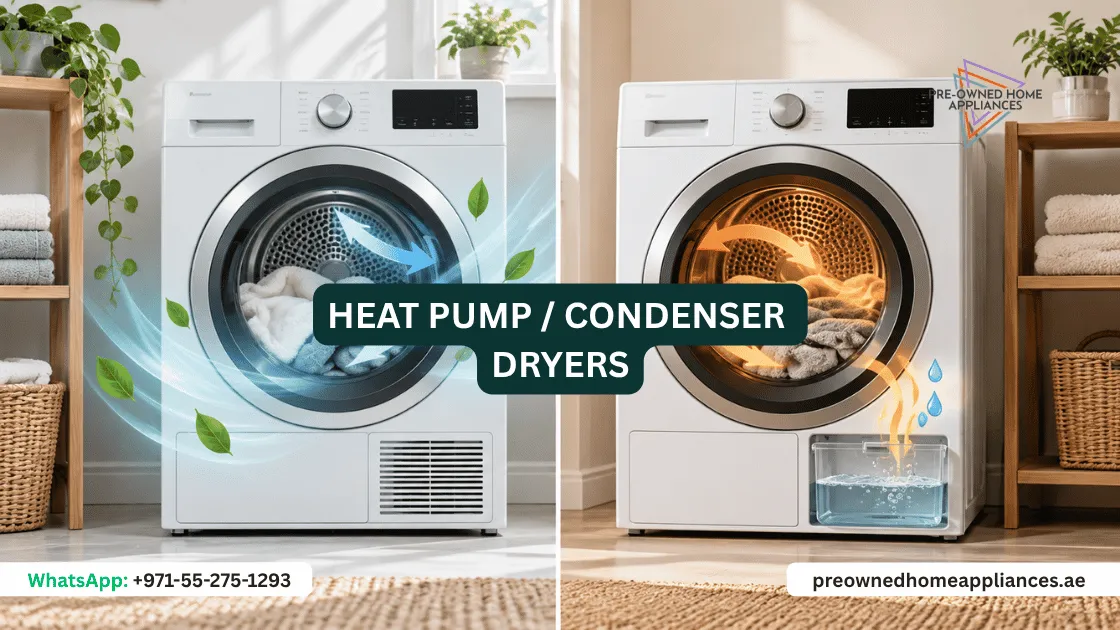
The towels are washed, but the drying rack is still full. A tumble dryer could solve the problem. Then you start browsing and find two similar machines with very different descriptions.
When comparing a used heat pump vs condenser dryer, start with your routine. How often will you dry clothes? What space is available? And what evidence shows that the particular machine works properly?
A heat-pump model can make sense for frequent drying. A conventional condenser dryer may suit occasional use and a lower purchase budget. The final choice depends on the model, condition and complete cost.
What is the difference?
A conventional condenser dryer uses an electric heating element. It removes moisture from the drying air and collects the resulting water.
A heat-pump dryer recovers and reuses heat within its drying system. It generally uses less electricity and lower drying temperatures than a conventional condenser design. Programme duration still varies by machine and load.
There is a naming detail worth knowing: heat-pump dryers also condense moisture. In shop comparisons, “condenser dryer” usually means a conventional model without a heat pump.
Siemens UAE explains these dryer types. Use the comparison to understand the category, then verify the exact unit’s specifications.
Compare the features that affect your routine
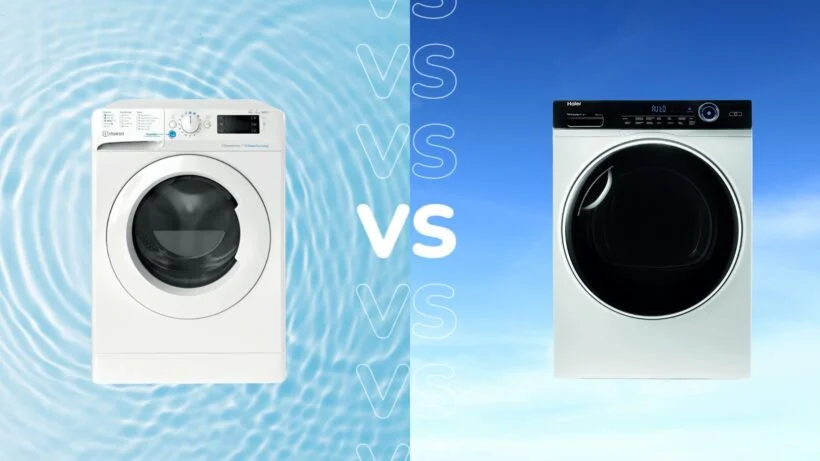
| Question | Why it matters when buying used |
|---|---|
| How often will you dry laundry? | More frequent use makes energy consumption more important |
| What does the complete purchase cost include? | Delivery, accessories and fitting can change the comparison |
| How long is the relevant programme? | A quick programme may not handle your usual full load |
| What maintenance does the model require? | Access to filters and other service points affects everyday use |
| Has the drying function been demonstrated? | A turning drum does not establish effective drying |
| Can the seller explain its condition and support? | Technology alone does not establish the quality of a used unit |
For example, someone drying towels several times a week may prioritize efficiency. Someone using a dryer only occasionally may place more weight on purchase price. Neither choice removes the need to inspect the machine.
Confirm the model and drying technology
Ask for the full model number and an identification-label photograph. Avoid choosing from a brand name or series number alone.
If a listing says “condenser/heat pump,” ask which system the unit actually uses. Those words should not be interchangeable when comparing energy performance.
Check the manufacturer’s information for capacity, dimensions and installation requirements. Also ask what accessories are included and whether any known faults remain.
Request a meaningful drying demonstration
A machine can power on and rotate without completing a useful drying cycle. Ask what testing the seller performed and whether a suitable damp load was used.
Where a demonstration is available, confirm the selected programme and load. Ask whether the programme completed normally and whether any error appeared.
Check the condition of the door seal, lint filters and water container where fitted. Ask about leaks, unusual sounds and reported drying problems. An inspection record is more useful than a general “fully working” description.
Use these questions when contacting the seller:
- What is the exact model and dryer type?
- Which programme was tested, and with what load?
- Did it complete normally without an error?
- What cleaning or maintenance was carried out?
- Are any accessories or parts missing?
- What support applies if a fault appears after delivery?
The answers help you compare actual units rather than polished photographs.
Check maintenance access before buying
Ask for the model’s care instructions. Different dryers use different filter and heat-exchanger arrangements, so avoid applying one cleaning method to every machine.
Some parts are user-accessible; others are not intended for routine removal. A self-cleaning feature also does not mean there are no maintenance tasks.
Look at whether you can reach the required filters once the dryer is installed. If the space is tight, routine cleaning should still be practical.
Have unresolved faults assessed before purchasing. Do not treat visible lint or a slow cycle as proof of one specific failed component.
Compare running costs using consistent figures
Ask for model-specific energy information on a comparable basis. Check whether a figure refers to one cycle, a set of cycles or annual use under stated conditions.
A simple planning calculation is:
Estimated electricity cost = energy per cycle × number of cycles × applicable electricity cost per kWh.
For illustration only, suppose two dryers use 2 and 4 kWh per comparable cycle. At 12 cycles monthly, the difference is 24 kWh. Multiply that by the applicable rate from your bill or provider.
These are hypothetical numbers, not measured performance or a UAE tariff quote. Real consumption depends on the model, programme, load and condition.
Then compare the possible savings with the purchase-price difference. Include any immediate maintenance or missing parts. Avoid assuming a more efficient label guarantees a quick payback on a particular used machine.
Check where the dryer will stand
Measure the space and allow the clearances specified in the manual. Confirm how collected water will be managed and whether a drain connection is supported or required for your setup.
Also check the permitted room conditions. A convenient corner, enclosed cupboard or outdoor utility area is not automatically suitable.
If you want to stack the dryer above a washer, have compatibility confirmed. Use the manufacturer-approved arrangement and suitable kit for those exact models. Matching widths or matching colours are not enough.
Common buying questions
Is a heat-pump dryer always the better used purchase?
No. Compare efficiency alongside condition, testing, support and total cost. An unresolved fault can outweigh an attractive specification.
Does a ventless dryer need no space around it?
No. Follow the model’s ventilation, clearance and room requirements even when no external exhaust duct is needed.
Should I choose by drying capacity alone?
Capacity matters, but programme limits and fabric care matter too. Check the loads you actually dry and follow garment labels.
Find a dryer that suits your laundry
Browse our pre-owned washer and dryer collection. Send your available space, usual laundry load and preferred budget when enquiring.
Ask for the exact model, condition photographs and testing details. Confirm the total delivered price and applicable support before choosing your machine.